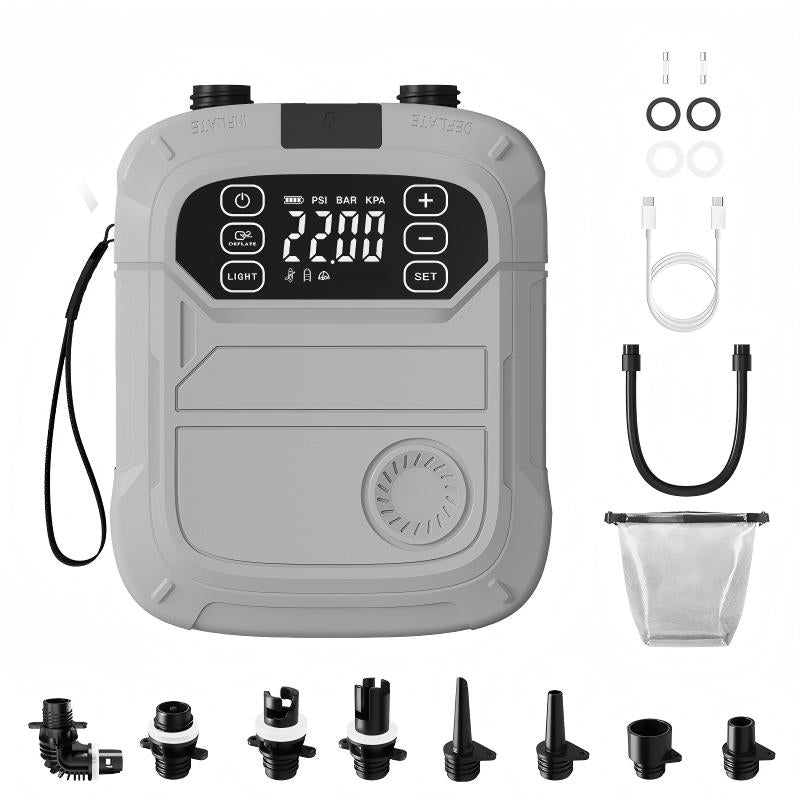


Frequently Asked Questions
1. How do I set the correct PSI for my inflatable paddleboard?
Use the recommended pressure printed on the board or provided in its manual. Set that pressure on the SUP pump before inflating, and never exceed the board manufacturer's maximum PSI rating.
2. What is the benefit of automatic shut-off on an electric SUP pump?
Automatic shut-off is designed to stop inflation after the selected pressure has been reached. It helps make setup more convenient, but you should still confirm your board's recommended pressure and ensure the hose connection is secure.
3. Do I need a 22 PSI pump if my board recommends a lower pressure?
Not necessarily. The listed 20 PSI and 22 PSI pumps can serve different pressure requirements. If your board's recommended pressure is within the 20 PSI model's range, a higher maximum setting may not provide a practical benefit.
4. How do I choose between a 20 PSI and 22 PSI SUP pump?
Choose based on the board's recommended pressure. The extra maximum pressure is useful only when a compatible board actually requires it; also compare adapters and power requirements.
5. Is it safe to leave an SUP pump running unattended?
Stay nearby and follow the duty-cycle guidance, even with automatic shut-off. Check the hose, valve adapter and pressure setting before each use.
6. How can I avoid overheating a rechargeable SUP pump?
Keep the ventilation openings clear and follow the specified run-time and cooling intervals. Stop using the pump if it overheats or behaves abnormally.
7. Why does pressure change when I disconnect the hose?
Pressure can settle or a little air may escape during removal. Check that the board's valve is closed and compare its pressure against the manufacturer's target range.
8. How should I maintain an SUP pump between trips?
Clean and dry the hose and nozzle, inspect the power connections and store the pump as instructed. Follow the maker's guidance for battery charging and storage.